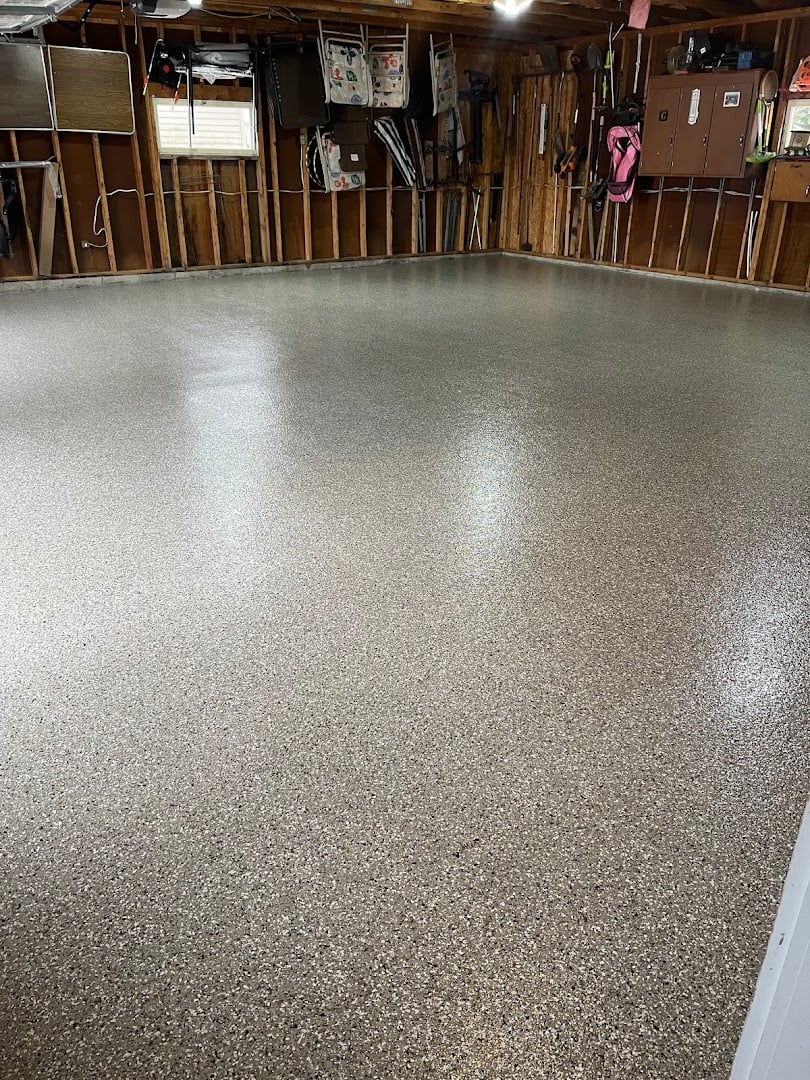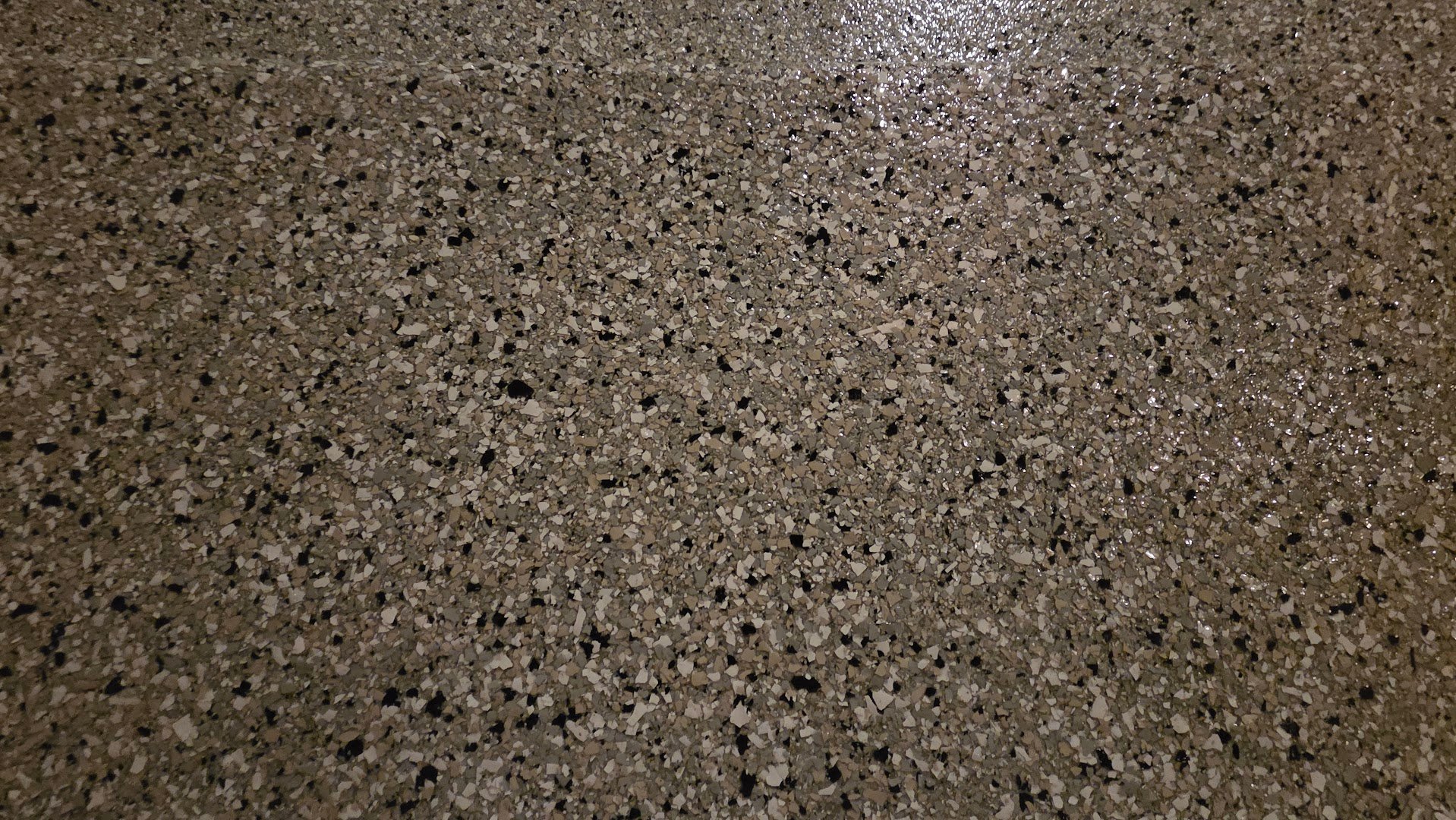

Quick Answer: Winter in Eau Claire means months of road salt, slush, and freeze-thaw cycles that quietly break down unprotected concrete garage floors. Salt accelerates pitting, scaling, and cracking, while moisture trapped in concrete pores expands as it freezes. Garage floor coatings create a protective barrier that blocks salt and water from penetrating the surface, helping your garage floor survive Wisconsin winters intact.
Key Takeaways
- Road salt and freeze-thaw cycles cause pitting, scaling, and cracking in untreated concrete garage floors.
- Garage floor coatings act as a protective seal, preventing moisture and chloride damage before it starts.
- Eau Claire homeowners who invest in garage floor coatings Eau Claire WI residents trust can avoid costly concrete repairs down the road.
Every Eau Claire winter brings the same ritual: scraping windshields, salting driveways, and driving through slush-covered roads. What most homeowners don't think about is where all that salt and moisture ends up after the drive home. It drips off your tires and undercarriage, pools on your garage floor, and sits there until it evaporates — leaving behind a residue that slowly eats away at your concrete.
Bare concrete is porous. It absorbs water, and in winter, that water doesn't just sit still. It freezes, expands, and creates pressure from the inside out. Add road salt into the mix, and you get a chemical reaction that speeds up concrete deterioration even further. Over a few seasons, this cycle can turn a smooth garage floor into a cracked, flaking mess.
This post breaks down exactly what's happening to your garage floor during Eau Claire's harsh winters, why road salt is such a problem, and how garage floor coatings offer a long-term solution.
Why Is Road Salt So Damaging to Concrete Garage Floors?
Road salt, typically sodium chloride or calcium chloride, is effective at melting ice because it lowers water's freezing point. That's great for road safety, but it's rough on concrete.
When salt-laden snow melts off your car in the garage, chloride ions seep into the concrete's surface. These ions react with the compounds in cured concrete, breaking down the paste that holds the aggregate together. The result is a condition called scaling, where thin layers of the concrete surface flake and peel away.
Calcium chloride, commonly used in Wisconsin's harsher winter treatments, is especially aggressive. It draws moisture into the concrete and can trigger chemical reactions that cause the surface to crumble faster than sodium chloride alone.
What Does Freeze-Thaw Damage Look Like on a Garage Floor?
Freeze-thaw damage typically starts small and gets worse each winter. Homeowners usually notice:
- Surface pitting: small craters or pockmarks where concrete has flaked away
- Scaling: a rough, peeling texture on the top layer of the slab
- Hairline cracks: thin fractures that widen over successive freeze-thaw cycles
- Spalling: larger chunks of concrete breaking off, often near joints or edges
If left untreated, these issues compound. Water gets into existing cracks, freezes, expands the crack further, and the cycle repeats every time temperatures swing above and below freezing — which happens often during an Eau Claire winter.
How Many Freeze-Thaw Cycles Does Eau Claire See Each Year?
Eau Claire's climate is a textbook example of freeze-thaw conditions. Temperatures regularly fluctuate above and below 32°F throughout late fall, winter, and early spring, meaning a single garage floor might endure dozens of freeze-thaw cycles in one season. Each cycle adds microscopic stress to the concrete, and combined with road salt exposure, the damage accelerates far faster than in warmer climates.
This is part of why garage floors in colder regions like western Wisconsin tend to deteriorate faster than those in milder states, even when the concrete mix and installation quality are similar.
Can a Garage Floor Coating Prevent Salt and Water Damage?
Yes. Garage floor coatings are designed specifically to block the two things that cause the most winter damage: moisture penetration and chloride intrusion. A properly applied coating — such as epoxy or polyaspartic — seals the porous surface of the concrete, so water and salt sit on top of the floor instead of soaking in.
This matters because once moisture is kept out, the freeze-thaw cycle loses its power. Water can't expand inside concrete it never penetrated, and salt residue can simply be swept or hosed off instead of chemically reacting with the slab underneath.
What Should Homeowners in Eau Claire Look for in a Garage Floor Coating?
Not all coatings perform equally in Wisconsin's climate. When comparing options, consider:
- Chemical resistance: the coating should withstand exposure to road salt, antifreeze, and other winter chemicals without breaking down.
- Flexibility: coatings with some flexibility handle minor concrete movement better than rigid options, reducing the risk of cracking.
- UV stability: for garages with windows or exposure to sunlight, UV-stable coatings resist yellowing and fading over time.
- Installation quality: proper surface preparation, including grinding and moisture testing, is just as important as the coating product itself.
Choose a polyaspartic or polyurea coating if you want faster curing times and strong resistance to temperature swings. Choose a traditional epoxy system if you're looking for a budget-friendly option and don't mind a longer installation window. For most Eau Claire homeowners dealing with heavy winter salt exposure, a hybrid polyaspartic-epoxy system offers the best balance of durability and cost.
What Happens If You Don't Protect Your Garage Floor From Winter Damage?
Skipping protection doesn't just mean a worse-looking floor. Untreated concrete that suffers repeated freeze-thaw and salt damage often requires:
- Costly patching or resurfacing within 5-10 years
- Full slab replacement in severe cases
- Increased risk of tripping hazards from spalled or uneven surfaces
- Reduced resale value, since a damaged garage floor is an easy red flag for home buyers
A coating applied proactively is almost always less expensive than concrete repair or replacement down the line.
Protect Your Garage Floor Before Next Winter Hits
Eau Claire winters aren't getting any milder, and road salt isn't going away. The good news is that protecting your garage floor doesn't require guesswork — it requires the right barrier between your concrete and the elements.
If your garage floor already shows signs of pitting, scaling, or cracking, now is the time to address it before another winter adds to the damage. Legacy Concrete Coatings specializes in garage floor coatings Eau Claire WI homeowners rely on to protect their concrete from salt, moisture, and freeze-thaw stress year after year. Reach out to Legacy Concrete Coatings to schedule an inspection and find the right coating system for your garage.
Frequently Asked Questions
How much does a garage floor coating cost in Eau Claire, WI?
Costs vary based on garage size, concrete condition, and coating type, but most homeowners can expect a range depending on whether they choose epoxy or polyaspartic systems. Legacy Concrete Coatings can provide an exact quote after assessing your specific garage floor.
How long does a garage floor coating last in a cold climate?
A properly installed polyaspartic or epoxy coating can last 10-20 years, even in climates with heavy freeze-thaw cycles and road salt exposure, as long as the surface is properly prepared before installation.
Can I apply a garage floor coating myself?
DIY kits exist, but they often lack the surface preparation, moisture testing, and professional-grade materials needed to withstand Wisconsin winters. Professional installation typically results in better adhesion and longer-lasting protection.
Will a garage floor coating fix existing cracks?
Coatings can fill minor hairline cracks during installation, but significant structural cracks or spalling usually need repair before a coating is applied to ensure a durable, long-lasting finish.
Is epoxy or polyaspartic better for Eau Claire winters?
Polyaspartic coatings generally offer better flexibility and faster curing in cold temperatures, making them well-suited to Eau Claire's freeze-thaw conditions, while epoxy remains a solid, budget-friendly alternative for moderate protection.